
-
I'm a 25+ year bootstrap founder and operator whose experience was built without VC, outside capital, or debt. Across that time I've owned and operated multiple startup bootstrap companies alongside business partners.
That means I know what's at stake when you bring someone into your operation — and I know what it feels like when someone else's decisions carry your livelihood. That's the perspective I bring into every engagement: your company, your risk, my job to protect both.
Over two decades as co-founder and president of a national performance-based lead-generation company, I helped build a virtual operation with a global team that generated more than six million verified purchase requests.
-
It's a claim with a definition behind it. Roughly the top 10% of bootstrap founders will tell you their company is worth $10M or more — self-assessed, unverified. The top ~3% have actually received acquisition offers of at least $10M in enterprise value — a number set by the market, not the founder.
That's my category: multiple offers exceeding $10M, built with no VC, outside capital, or debt. Behind the number: 6M+ verified purchase requests over 19 years in pay-for-performance lead generation and paid search.
Market-tested, not self-claimed.
-
Most of what I do, someone else sells a piece of. What's uncommon is the combination: a founder-operator with a market-tested bootstrap outcome, who helps you define a specific problem and then handles it — without requiring a full-time hire, a framework you have to adopt, or a predetermined job description.
Fractional COO firms sell open-ended monthly retainers. EOS Integrators require you to run EOS. Specialists execute a process someone else has to design. AI shops build workflows without operating judgment.
I start with a close-ended objective, at a fraction of agency cost, and prove it before either of us commits to more.
This means I know exactly what's at stake when you bring someone into your operation — and I know what it feels like when someone else's decisions carry your livelihood. That's the perspective I bring into every engagement: your company, your risk, my job to protect both.
Over two decades as co-founder and president of a national performance-based lead-generation company, I helped build a virtual operation with a global team that generated more than six million verified purchase requests.
-
As co-founder and president of a national, performance-based lead generation business, I built and scaled an operation that generated more than 6 million verified purchase requests over 19 years, sustained 35–40% operating margins, and survived both the dot-com collapse and the 2008 financial crisis — without outside equity or external debt. The result: multiple acquisition offers exceeding $10M in enterprise value.
Along the way, I pioneered globally distributed virtual teams before that model was common, designed training and accountability systems from scratch, and ran lead generation, paid search, technology, and governance as one connected operation.
-
Sometimes you should — if the work is defined, repeatable, and someone's already built the process. I've hired that way myself: over $100,000 of talent on Upwork, as the client.
That experience is also why I'd flag the failure mode. Lower cost up front often becomes higher cost in practice, when the work takes longer, requires more oversight, and creates rework you end up managing.
The question isn't the hourly rate — it's whether the task needs someone to execute a defined process or someone to define it.
-
Founder-led startup and bootstrap companies where the founder has real expertise — in technology, product, lead generation, client relationships, or commercial strategy — and where growth is being limited more by operating structure than by opportunity.
Industries vary; the operating architecture discipline doesn't. What I don't know about your specific business, I get up to speed on fast — that's a bootstrap survival skill.
These founders are usually highly capable, skeptical of generic advice, and already know several things should be operating better. They want someone trustworthy to execute the founder's vision and take responsibility for the results, while they maintain control and autonomy.
-
I prioritize what is consuming your bandwidth without producing revenue: fewer hats to wear, less decision fatigue, less invisible work. My underlying goal is to make it easier for you to switch off and recharge.
I specialize in operational triage and AI-enhanced remote operations management — restoring executive bandwidth, detecting leakage and protecting margin, and building systems that can execute independently.
Sometimes founders need a targeted intervention: an operator who steps in, handles a specific problem, and exits cleanly. Other times the need is an ongoing fractional partnership that strengthens the operating core and supports scalable execution. I work in both capacities.
The title has always been less important than the outcome: a founder whose bandwidth is protected, a business that runs more predictably, and margin that stops leaking.
-
The work starts with a practical question: what is consuming founder bandwidth, weakening margin, or slowing execution — and what operating structure will restore leverage?
From there, the work organizes around three areas:
1. Founder Bandwidth Protection. I map where your time, attention, and decisions are going, then build the structure that protects them: clearer decision lanes, cleaner handoffs, stronger follow-through.
2. Operational Leakage Detection. I look across revenue, margin, time, capacity, and customer trust to identify the highest-impact leaks, estimate the cost of each, and design practical fixes.
3. Execution Infrastructure. I convert founder intent into repeatable workflows, clear responsibility, and measurable operating rhythms — SOPs, handoff documents, accountability structures, and a cadence that keeps the right things visible without creating overhead.
-
I do not pretend to understand your industry on day one.
My expertise is the recurring operating architecture of founder-led bootstrap companies: objectives, revenue flow, responsibility, decisions, handoffs, systems, accountability, and guardrails. I get up to speed by mapping how your business actually works and learning from the people closest to it.
You and your team retain domain authority. I bring pattern recognition, synthesis, and coordinated execution.
-
Yes. Funding buys headcount and runway; it doesn't buy operational discipline. Many funded startups have capital without clarity — priority sprawl, weak follow-through, and burn without urgency.
Bootstrapped founders are my primary audience because I understand their operating reality from the inside: every dollar, customer, decision, and week matters. In funded environments I bring that same discipline — sharper priorities, cash-aware execution, cleaner handoffs, and lightweight systems that keep capital from creating complexity.
-
I can serve as an Operating Partner, providing flexible portfolio-operations capacity across a small group of companies — working with ownership, CEOs, and leadership teams to translate strategic priorities into operating plans, accountability, and sustained execution.
The mandate might include supporting a newly acquired company's transition, coaching leaders, strengthening operating cadence, assisting with executive hiring, resolving vendor or contract issues, and moving stalled cross-functional initiatives forward.
-
I bring founder-level ownership results without needing founder-level control. I am not attached to a title, and I do not need to be the center of gravity to contribute at a high level.
I treat your priorities, time, cash, reputation, and commitments with an owner's level of care. You define the objective, decision boundaries, and what success looks like; I bring judgment and execution inside that mandate. I will challenge assumptions when the evidence warrants it, but I do not create a competing center of authority. You retain final authority and approve any material expansion of my role.
Some work can be completed independently; most meaningful operational work requires at least limited access to people and systems. We agree on that access, my authority, and what success looks like before the work begins.
-
How much direct contact I have with your team is a dial you set — not a default I assume.
Some engagements begin with me working with you alone, on independent workstreams or with vetted outside talent I bring. When I do work with your people, I arrive with a role you've defined and framing designed to encourage cooperation — no new boss, no mystery consultant, no HR confusion.
My role is to give your people clearer roles, better accountability, and systems that make their work more effective — not to displace the people you've already chosen to trust.
-
Unlikely. I introduce only enough structure to make responsibility visible, communication useful, and follow-through reliable. In practice, that usually means better meetings and fewer unnecessary conversations — not more of either.
The operating system should reduce your burden. The moment it becomes another thing you have to manage, it has failed.
-
Directly, and with data. If I believe something is off track, I'll say so plainly and bring the evidence. I won't offer superficial agreement to preserve comfort — that isn't what you'd be paying for.
But the final call is always yours. My job is to provide options and improve your decisions, not to take them.
-
You'll feel measurable relief and see visible progress: a stalled project moving again, clearer responsibility, better information reaching you, fewer unresolved issues resurfacing — and less of your own time consumed by routine operations.
If those things aren't happening, we address it directly at the review points we agreed on. The relationship has to keep earning its place.
-
I once returned to a company that had gone from more than $100,000 in monthly profit to losing approximately $17,000 per month in under a year. Projects had stalled, oversight had disappeared, responsibilities were unclear, and revenue was leaking across operations.
I rebuilt the operating structure: recruited and trained a virtual team across multiple time zones, restored accountability and communication protocols, completed derailed projects, and returned the business to sustained profitability. That company went on to operate for over another decade.
The full account, and five others, are in the case studies.
About Daniel DeHaven
Meet the Founder
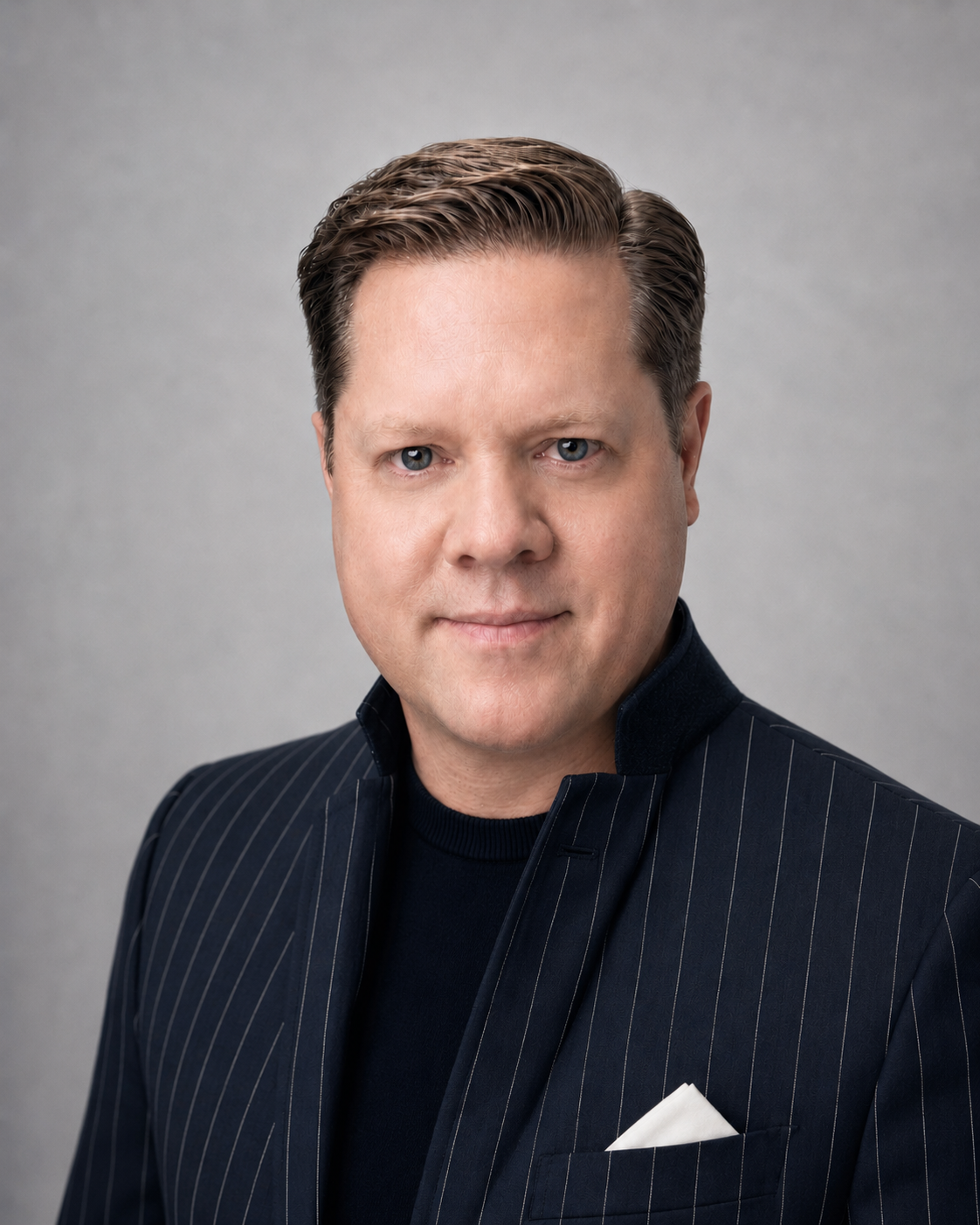
I've spent 25 years at the intersection of leadership, human behavior, and performance — launching my first company shortly after university and building ever since.
My background includes a Master's in Clinical Social Work and years of executive performance coaching, which shape how I design systems with concinnity and built for the humans to protect their bandwidth.
Away from work, I've traveled to more than 50 countries and completed two 200-hour yoga teacher certifications. I enjoy team sports, hiking, cycling, and finding peace in nature.